All posts by: the_admin

by in Level Measurement

Product Spotlight: 4800 Series – Submersible Level Transmitters

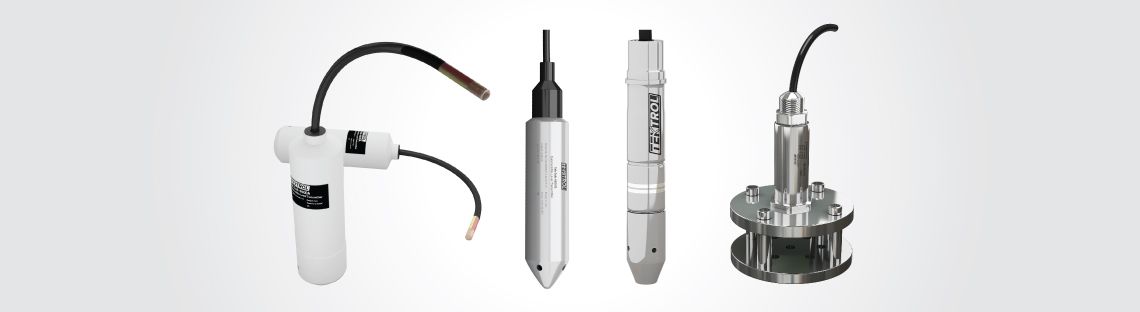
Our newest member of the Tek-trol family is our 4800 series Submersible Level Transmitters are designed to provide accurate level measure in a variety of fluids and environments. Whether manufactured from rugged ceramic or stainless steel, our submersibles offer accurate and reliable level measurement in some of the harshest conditions. Let’s meet the family: 4800A – This model is designed for continuous submersion in aggressive fluids. It affords a rugged ceramic pressure sensor encased in PTFE housing that provides excellent corrosion resistance in most fluids. 4800B – Another one of our sturdy ceramic models , the 4800B houses a has a high-precision piezoresistive silicon sensor coupled with a ventilation tube that automatically compensates for changes in atmospheric pressure above the tank. 4800C – A slimmed down version of our submersibles, the 4800C measures only 19mm in diameter making it perfect for cramped, narrow conduit installations. Also armed with a piezoresistive sensor, this level transmitter is specifically designed to fit easily into boreholes, wells and slender pipes. Constructed of stainless steel body, it functions well even under the most severe application conditions. 4800D – The final member of our Submersible Level Transmitter family is another one of our heavy hitters. The 4800D is made of stainless steel and reinforced with a protective sensor cage. Designed exclusively for slurry and wastewater applications. Its piezoresistive silicon sensor is thoroughly protected from damage as well as debris as the clog-free sensor cage protects the transmitter from floating solids as well as vibrations or turbulence in the fluid under […]
by in Flow Measurement

Flow and Level Measurement

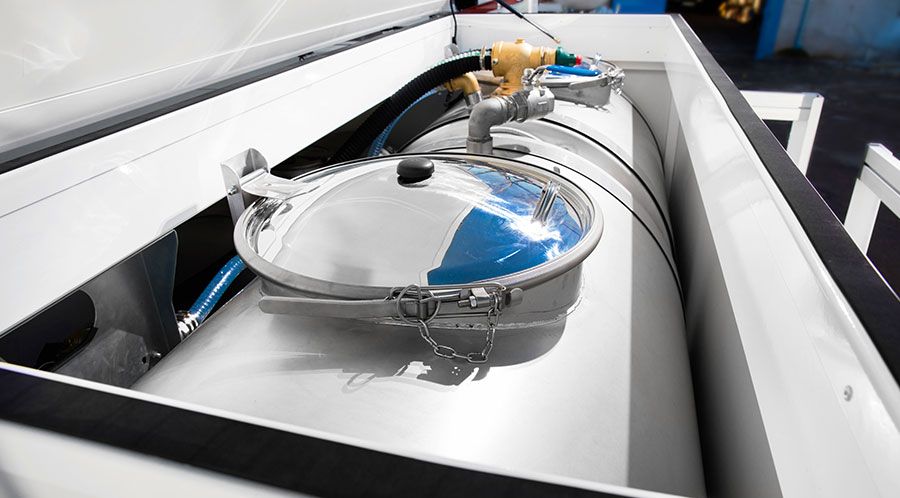
Instrumentation technology has witnessed dramatic developments in past few decades. Numerous techniques have been researched and developed using various physical phenomena to fulfill demand of flow and level measurement of thousands of industrial process control applications and these advancements will continue to go on. However, stipulating a flow or level meter that can consistently perform satisfying all anticipated process conditions is still a complex and challenging task. Instrumentation technology has witnessed dramatic developments in past few decades. Numerous techniques have been researched and developed using various physical phenomena to fulfill demand of flow and level measurement of thousands of industrial process control applications and these advancements will continue to go on.  However, stipulating a flow or level meter that can consistently perform satisfying all anticipated process conditions is still a complex and challenging task. Almost all the conventional flow and level meters used complex mechanical designs with multiple moving parts. Involvement of mechanical design naturally comes with wear-and-tear and thus additional maintenance cost. Automatically users prefer to avoid such mechanical and electromechanical instruments and opt for more robust electronic devices which have minimum or no moving parts. The base theory behind latest technology existed even back in a decade or two. But advancement in electronics, materials and manufacturing methods has improved the sustainability of products in rigorous environment and pre-integration of assemblies has made its installation easier. This is the main reason of growing popularity of latest flow meters such as Coriolis, ultrasonic and Vortex. Ultrasonic technology has widened its […]

by in Pressure Measurement

TYPES OF PRESSURE: When and why are they used?

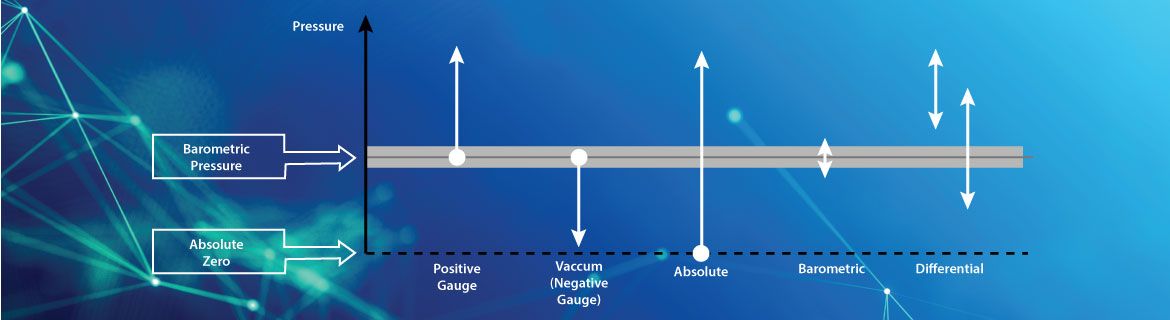
Automation is a key of rapid industrial development in 21st century and process control is an integral aspect of automation. Process control is extensively used in applications where bulk production is carried out in a consistent manner. It includes wide range of application area such as chemical & mechanical processes, food & goods packaging industry, power plants, oil & petroleum refineries and much more. A fundamental requirement of any of these process environments is an accurate and precise measurement. Good measurement practices along with consistent and reliable measurement systems maintain the defined level of accuracy and ultimately direct to the expected outcome. Clear and systematic way of expressing the entities under measurement is needed to analyze the outcome and take necessary control action. Most of the process control applications use ‘pressure’ as a core entity of measurement and regulation. Pressure measurement products provide solution to almost every application need.  Pressure sensors find their use in countless number of everyday ordinary applications. They are also used in indirect form for measuring other variables such as fluid level, fluid flow, speed etc. Therefore, it is important to understand the basic concepts of pressure for interpreting various ways of its measurement and related applications. The simplest definition of pressure says it is a measure of the force applied on an object which is perpendicular to the surface and distributed equally. This definition applies to solids whereas fluid pressure is nothing but force exerted per unit area by fluid. Going further, various units of pressure […]

by in Flow Measurement

Accuracy and Uncertainty in Measurements

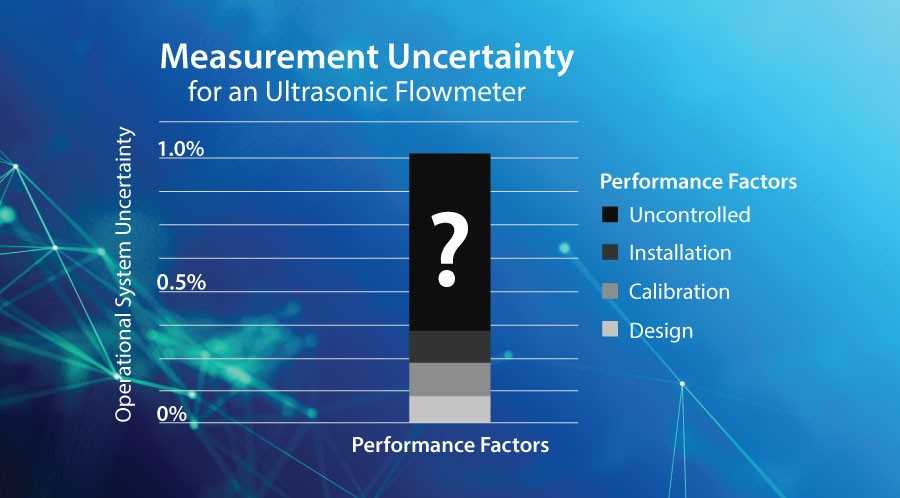
Accuracy and Uncertainty in Measurements Process control systems involve measurement of a number of parameters outcome of which is reflected in control action taken by the system. Therefore correctness of measurement has utmost importance and manufacturer of process measurement instruments is committed to ensure and provide accuracy that is claimed to be. Accuracy and uncertainty closely affect the performance but unfortunately, these terms are often used inappropriately in specifications and thus can be misguiding. Therefore, it is essential to know the reference of these terms. When mentioned in percentage it is important to know whether it is based on full scale (FS) or actual reading (AR). Let’s consider an example of the ultrasonic flow meter to understand its performance dependencies. Ultrasonic flow meters are widely used in pipe flow measurement, custody transfer, and flow survey. These meters are considered to be advantageous over conventional flow meters.  The ultrasonic metering technique works on the physical characteristic of a sound wave that changes frequency when it gets reflected by particles in motion in process media. Hence, the performance of ultrasonic flow meters depends on two major factors: the nature of the process fluid and the meter’s linkage. It requires an acoustically conductive process fluid through which a sound wave can be transmitted and its reflections can be detected. Linkage of the meter is nothing but the connection between the adjacent mediums. For example, a linkage between the transducer – pipe wall, pipe wall – lining (if present) and lining – process fluid. […]

    [rt_retina_image img_1x="3986" img="3985" class="sidepanel-logo" img_align="" img_bottom_margin="30px" link="" link_target="" link_title=""]

    Etiam magna arcu, ullamcorper ut pulvinar et, ornare sit amet ligula. Aliquam vitae bibendum lorem. Cras id dui lectus. Pellentesque nec felis tristique urna lacinia sollicitudin ac ac ex. Maecenas mattis faucibus condimentum. Curabitur imperdiet felis at est posuere bibendum. Sed quis nulla tellus.

    ADDRESS

    63739 street lorem ipsum City, Country

    PHONE

    +12 (0) 345 678 9

    EMAIL

    [email protected]

    [button button_text="PURCHASE" button_style="style-1" font="heading-font" button_size="hero" button_link="#" link_open="" button_icon="icon-right-thin" href_title="PURCHASE"]